Let’s be honest. Remember sitting through that mandatory workplace safety video? The grainy footage, the wooden acting, the desperate hope for a fire drill? Or maybe you’ve tried to learn a complex surgical procedure or engine repair from a static diagram. It’s… not ideal.
Well, the game is changing. Enter Extended Reality, or XR. It’s the umbrella term for immersive technologies—Virtual Reality (VR), Augmented Reality (AR), and Mixed Reality (MR). And it’s moving professional training and education from passive observation to active, visceral experience. Here’s the deal: XR isn’t just a fancy gadget. It’s becoming a fundamental tool for building competence, confidence, and muscle memory in a risk-free environment.
What Exactly is XR in This Context?
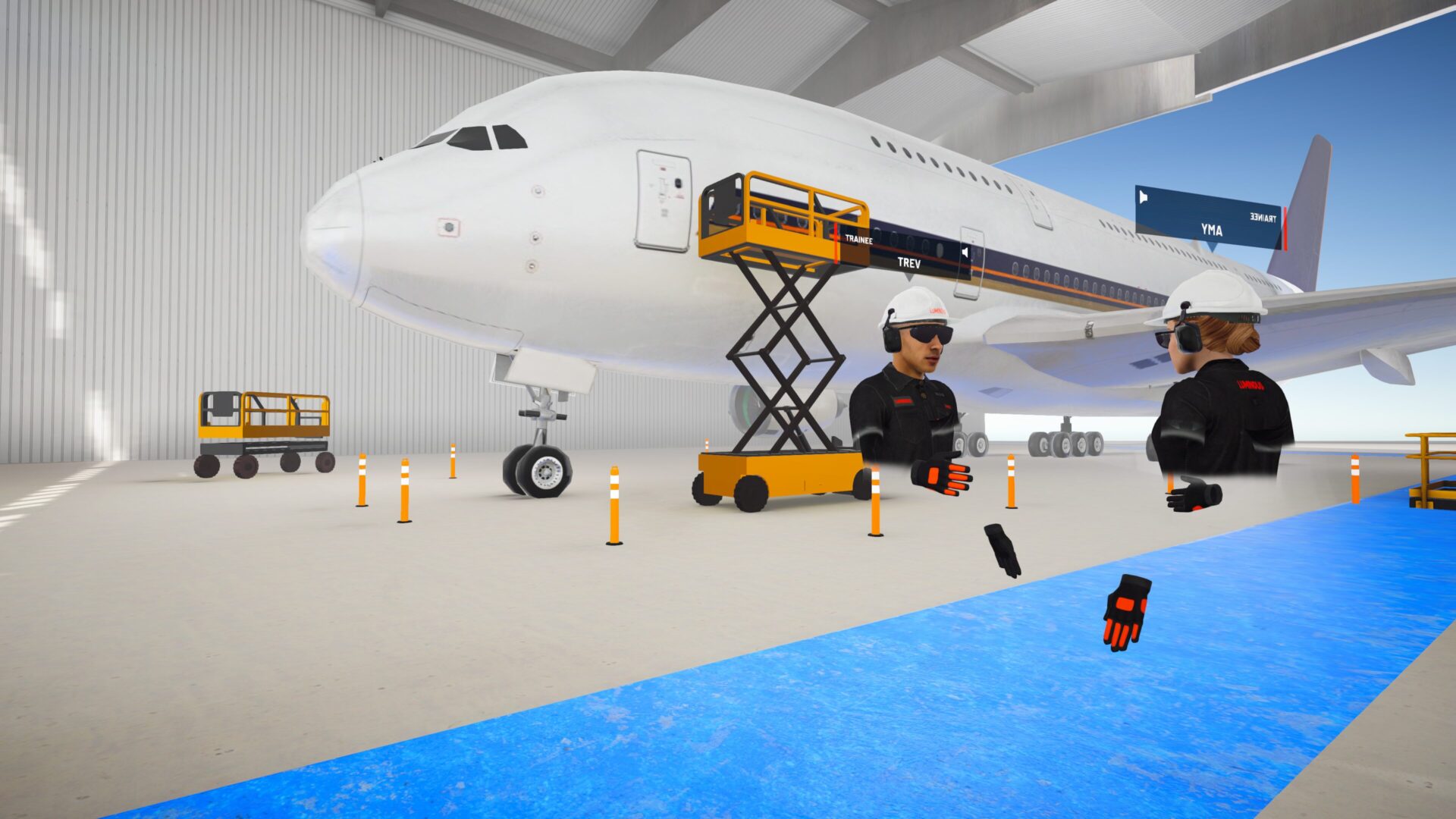
Think of XR as a spectrum. On one end, you have Virtual Reality (VR)—a fully digital, immersive world that blocks out the physical one. Put on a headset, and you’re on an oil rig or in a virtual operating theater.
On the other end, there’s Augmented Reality (AR). This layers digital information onto the real world. Through your tablet or smart glasses, you see animated repair instructions overlaid on the actual machine you’re fixing.
In the middle sits Mixed Reality (MR), where digital and physical objects interact in real-time. You could, for instance, place a holographic engine model on a real table, take it apart with your hands, and see the internal parts moving.
The Tangible Benefits: Why Companies and Schools Are Betting on XR
The shift to immersive learning isn’t about the “cool factor.” It’s driven by some pretty staggering outcomes. The core advantage? Experiential learning. You learn by doing, not just hearing. This tackles some major pain points in traditional training programs.
1. Mastering High-Stakes Skills in Zero-Risk Environments
This is the big one. VR training simulations allow professionals to practice dangerous or rare scenarios without consequence. A surgeon can perform a critical procedure dozens of times before touching a patient. An electrician can practice working on live high-voltage equipment—with no chance of electrocution. The stress, the focus, the sequence of actions… it all becomes ingrained safely.
2. Boosting Retention and Speeding Up Proficiency
We forget a lot of what we hear. We remember more of what we see. But we truly internalize what we do. The immersive, multi-sensory nature of XR leads to significantly higher knowledge retention. Some studies suggest retention rates can be up to 75% higher compared to traditional methods. That means faster time-to-competency for new hires and upskilling employees.
3. Slashing Training Costs (The Long Game)
Sure, the initial investment in XR hardware and software development can be substantial. But consider the recurring costs of traditional training: flying instructors across the globe, shutting down production lines for live demos, using expensive physical equipment for practice (that can break), or even the cost of real-world mistakes during training. XR scales beautifully. One well-built simulation can train thousands, anywhere, anytime.
Real-World Applications: XR in Action Today
This isn’t science fiction. It’s happening right now across industries.
Healthcare & Medicine
Medical students use VR to “walk” through a 3D model of the human body, peeling back layers of anatomy. Surgeons rehearse complex operations using patient-specific scans in a VR space. AR even assists during actual surgeries, projecting vital data or guidance directly into the surgeon’s field of view.
Manufacturing & Field Service
New technicians use AR glasses that superimpose step-by-step repair instructions and highlight the exact components they need to touch. They get “x-ray vision” into machinery. VR trains assembly line workers on new processes before the physical line is even built, reducing errors and ramp-up time dramatically.
Soft Skills & Leadership Training
This is a fascinating growth area. Employees can practice difficult conversations, public speaking, or diversity and inclusion scenarios in VR. They face a virtual audience or colleague, which feels real enough to trigger genuine emotional responses, but safe enough to experiment and receive feedback. It’s a rehearsal for reality.
The Flip Side: Challenges and Considerations
It’s not all smooth sailing, of course. Widespread adoption of XR for professional training faces hurdles.
Cost and Accessibility: High-end VR/AR gear is still a significant investment for smaller organizations. The development of custom, high-quality simulations is also resource-intensive.
Technical Limitations & “Sim Sickness”: Hardware needs to become lighter, more comfortable, and higher resolution. Some users experience motion sickness in VR, though this is improving with each hardware generation.
The Human Touch: XR shouldn’t—and likely can’t—replace all human instruction. The debrief with a mentor, the nuanced Q&A, the shared experience of a classroom… these remain crucial. The goal is to augment, not replace, human expertise.
Gazing into the (Virtual) Crystal Ball
Where is this headed? A few trends are emerging. We’ll see more cloud-based XR, reducing the need for powerful local hardware. The rise of the Metaverse concept points to persistent virtual training campuses where people from across the globe can collaborate. And AI integration will create adaptive simulations that respond uniquely to each learner’s choices, offering a truly personalized training path.
The line between “training” and “doing” is blurring. With XR, the practice field becomes indistinguishable from the real arena—except for the stakes. It offers a space to fail, to iterate, to build not just knowledge but instinct. And that, in the end, might be its most profound gift: the confidence that comes from having already been there, done that, long before you ever step onto the actual stage.