Let’s be honest. For years, JavaScript was the only game in town for client-side logic on the web. And it’s done an incredible job. But as we push to build desktop-class applications in the browser—think video editors, CAD software, scientific simulations, or AAA games—we hit a wall. A performance wall.
That’s where WebAssembly, or Wasm, crashes the party. It’s not a replacement for JavaScript, but a powerful complement. Think of it like this: if JavaScript is the versatile, quick-thinking tour guide of the web, WebAssembly is the specialist brought in to handle the heavy lifting—the complex calculations, the physics engines, the real-time data processing. It runs at near-native speed. And that changes everything.
What Exactly Is WebAssembly?
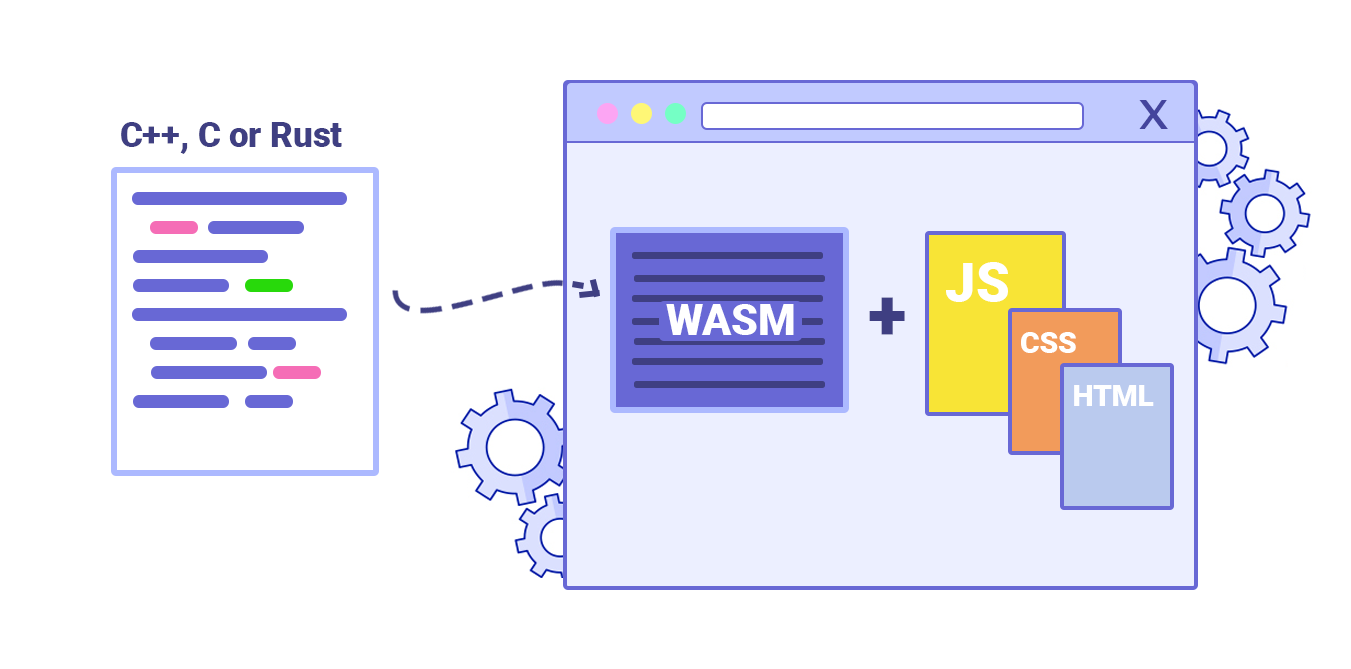
In simple terms, WebAssembly is a low-level binary instruction format. It’s a compact bytecode that runs in a secure, sandboxed environment inside the browser’s JavaScript engine. You don’t write Wasm directly (usually). You compile it from languages like C, C++, Rust, or Go.
Here’s the deal: it’s designed to be a compilation target. That means you can take decades of existing, performant code and bring it to the web. Libraries for audio processing, cryptography, or 3D rendering that were once locked to native platforms can now run safely in a browser tab.
The Core Benefits: Why Bother with Wasm?
Okay, so it’s fast. But why? And what else does it offer?
- Near-Native Performance: The binary format is small and fast to decode. Execution is optimized for modern CPU architectures, leading to predictable, blistering speed.
- Language Agnosticism: You’re no longer confined to JavaScript. Need memory safety? Use Rust. Have a legacy C++ codebase? Compile it. This is a huge win for code reuse and team expertise.
- Deterministic Performance: Unlike JavaScript’s Just-In-Time (JIT) compilation, which can sometimes cause unpredictable pauses, Wasm code is compiled ahead-of-time. This leads to more consistent frame rates and smoother interactions.
- Small Bundle Sizes: The binary format is dense. Complex functionality can often be delivered in a smaller footprint than the equivalent JavaScript, speeding up load times.
- Security Sandbox: It executes within the same sandbox as JavaScript, with no direct access to the DOM or system APIs unless explicitly allowed through JavaScript. It’s safe by design.
Getting Your Hands Dirty: A Practical Wasm Workflow
Alright, let’s dive in. How do you actually use this thing? The most straightforward path today, honestly, is using Rust with wasm-pack. It’s a fantastic toolchain that smoothes out the rough edges.
Here’s a simplified flow:
- Write your logic in Rust. Define functions you want to expose to JavaScript.
- Use
wasm-pack build --target web. This compiles your Rust code to a Wasm binary and generates a JavaScript “glue” file that handles the module instantiation and memory management. It’s a lifesaver. - Import the module in your JavaScript. It feels like importing an ES6 module. Seriously, it’s that clean now.
- Call your Wasm functions. You invoke them like any other async function. The boundary between JavaScript and Wasm is becoming beautifully seamless.
Of course, you can use the Emscripten toolchain for C/C++. It’s more mature in some areas, but can be a bit heavier. For new projects, Rust’s ecosystem is incredibly welcoming.
The Integration Dance: Wasm and JavaScript
This is the crucial part. Wasm doesn’t live in a vacuum. It communicates with JavaScript through a well-defined API. The key concepts are memory and functions.
Wasm has its own linear memory (a big array of bytes). JavaScript can read and write to it. So, to pass a string or a complex object, you often write it into that shared memory from JavaScript, tell Wasm where it is, let Wasm do its work, and then read the result back out.
Sounds clunky? It can be. But newer features like the WebAssembly JavaScript Promise Integration (JSPI) and Interface Types are on the horizon to make passing rich types (strings, objects, arrays) far more natural. The future is less manual memory juggling.
When to Reach for WebAssembly (And When Not To)
Wasm isn’t a magic bullet. It’s a specialized tool. Here’s a quick table to help you decide:
| Great for Wasm | Stick with JavaScript |
| CPU-intensive tasks (image/video manipulation) | DOM manipulation & UI updates |
| Physics engines & complex simulations | Simple business logic & form handling |
| Cryptographic operations | Quick prototypes & simple sites |
| Porting existing native libraries | Tasks requiring direct, frequent DOM access |
| Audio synthesis & real-time signal processing |
The rule of thumb? Profile first. If your JavaScript is struggling with a hot function, a tight loop, or heavy computation—that’s your Wasm candidate. For everything else, JavaScript is still the perfect, flexible choice.
Navigating the Current Landscape & Pain Points
It’s not all smooth sailing yet. The ecosystem is moving fast, but there are bumps. The initial download and compilation of a large Wasm module can cause a pause. This is the “cold start” problem. Tools like streaming compilation (the browser compiles as it downloads) and caching strategies are mitigating this.
Debugging can also be… an adventure. Source maps support is improving, but stepping through original Rust or C++ code in the browser devtools isn’t as seamless as JavaScript. You often rely on good old console logging back to JavaScript.
And finally, the DOM. Wasm cannot directly manipulate the DOM yet. Every UI change must go through JavaScript. This overhead can negate performance gains for UI-heavy apps. The WebAssembly GC Proposal and host bindings aim to fix this, allowing Wasm to reference DOM objects directly. It’s a game-changer in the making.
The Future is Compiled, and It’s Collaborative
So where does this leave us? WebAssembly is quietly revolutionizing what’s possible on the web. It’s breaking down the walls between native performance and web accessibility.
The most exciting applications aren’t pure Wasm. They’re hybrids. The UI and glue are in JavaScript—React, Vue, Svelte doing what they do best. And the core engine, the beating heart of the application, is a Wasm module compiled from a language built for speed and safety.
It’s a partnership. A collaboration. JavaScript handles the world of the browser, the events, the DOM. Wasm handles the number crunching, the heavy algorithms, the legacy code. Together, they’re building a web that feels native, that responds instantly, that can tackle problems we once thought were impossible outside of a desktop application.
That’s the real shift. It’s not about one language winning. It’s about the web platform finally growing the muscle it always needed. The tools are here. The performance is on the table. The question isn’t really if you’ll use WebAssembly, but which part of your next ambitious project will demand it.