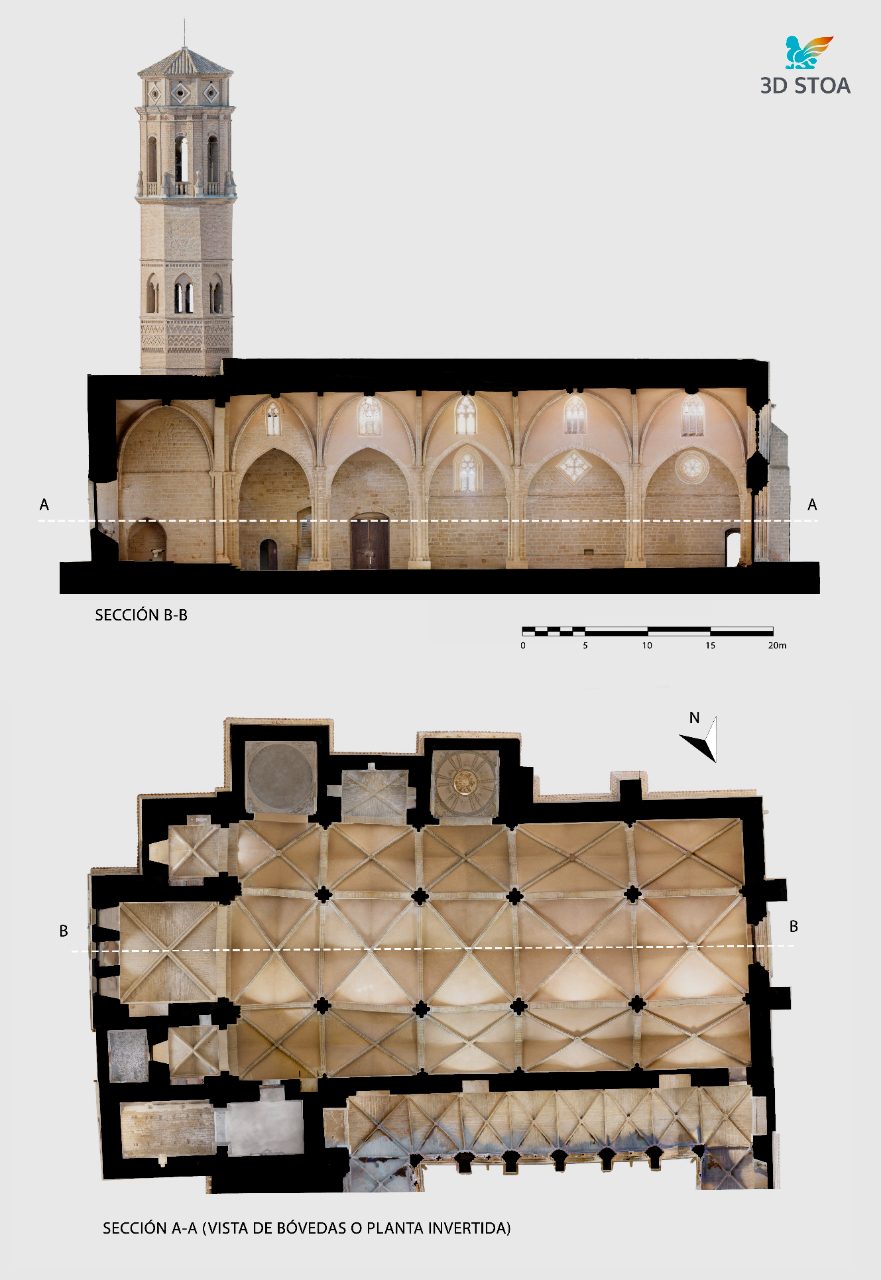
Imagine standing inside the ruins of Palmyra — not through a grainy YouTube video, but in a living, breathing digital model where you can touch every stone, zoom into every crack, and watch the sunset cast shadows across ancient columns. That’s the promise of digital twin technology for cultural heritage. It’s not just about 3D scanning anymore. It’s about creating a dynamic, data-rich replica that breathes alongside the original.
Honestly, when I first heard “digital twin,” I thought it was just another buzzword — like “blockchain for everything” back in 2017. But the more I dug into it, the more I realized: this is different. This is a game-changer for how we protect what’s irreplaceable.
What Exactly Is a Digital Twin?
Let’s break it down. A digital twin is a virtual replica of a physical object or system. But here’s the key: it’s not static. It’s updated in real-time with data from sensors, drones, and historical records. Think of it as a living mirror — one that can simulate weathering, predict structural decay, or even model the impact of a flood before it happens.
For cultural heritage, this means a temple, a mosque, or a medieval bridge gets a second life in the cloud. And that second life can be studied, shared, and even restored without ever touching the original.
How Is It Different from a 3D Model?
Great question. A 3D model is like a photograph — a snapshot in time. A digital twin is more like a living organism. It ingests data. It learns. It can even “talk back” to engineers and conservators. For example, if a sensor detects rising humidity inside a frescoed chapel, the twin updates and warns you: “Hey, that moisture is eating away at the plaster.”
That’s the difference. It’s proactive, not reactive.
Why Cultural Heritage Needs Digital Twins — Right Now
We’re losing heritage sites at an alarming rate. Climate change, war, tourism wear-and-tear, and plain old neglect. The Notre-Dame fire in 2019 was a wake-up call. But here’s a lesser-known fact: before the fire, a team had already laser-scanned the cathedral in 2015. That scan — a rough precursor to a digital twin — was used to rebuild the roof and spire with stunning accuracy.
Now imagine if that scan was a full digital twin. It could have predicted the fire risk. It could have modeled evacuation routes. It could have simulated the structural collapse in real-time.
That’s the edge we need.
The Pain Points Digital Twins Solve
- Preventive conservation — catch cracks, leaks, or biological growth before they become disasters.
- Disaster recovery — if a site is damaged, the twin serves as a blueprint for restoration.
- Accessibility — let people explore fragile sites virtually, reducing physical foot traffic.
- Education — students and researchers can “walk through” history without leaving their desks.
- Funding justification — a compelling digital twin can wow donors and grant committees.
And honestly, there’s an emotional angle too. When you see a digital twin of a site that’s been destroyed — like the Buddhas of Bamiyan — it’s not just data. It’s a form of digital mourning, and a promise that memory doesn’t have to die.
How Digital Twins Are Built for Heritage Sites
Building one isn’t simple. It takes a village — of engineers, archaeologists, drone pilots, and data scientists. Here’s a rough outline of the process:
- Data capture — LiDAR scans, photogrammetry, ground-penetrating radar, and thermal imaging. Drones fly over, robots crawl inside.
- Modeling — Point clouds are stitched into a 3D mesh. Textures are mapped from high-res photos.
- Sensor integration — IoT sensors monitor temperature, humidity, vibration, and even air quality.
- Data fusion — All that data is fed into a platform (like Unity or Unreal Engine) to create the living model.
- Simulation & analytics — AI algorithms predict future states, like “this wall will crack in 5 years if we don’t intervene.”
It’s not cheap. A full twin for a large site can cost hundreds of thousands of dollars. But compared to the cost of losing a site forever? It’s a bargain.
A Quick Look at Some Real-World Examples
| Site | Location | Digital Twin Purpose |
|---|---|---|
| Notre-Dame Cathedral | Paris, France | Post-fire restoration |
| Machu Picchu | Peru | Tourism impact monitoring |
| Ancient city of Pompeii | Italy | Structural decay prediction |
| Rani Ki Vav stepwell | India | Water damage simulation |
| Bamiyan Buddhas | Afghanistan | Virtual reconstruction |
Each of these projects faced unique challenges — from political instability to extreme weather. But the digital twin gave them a fighting chance.
The Tech Stack Behind the Magic
You don’t need to be a coder to appreciate this, but the tools matter. Here’s what’s currently trending:
- LiDAR (Light Detection and Ranging) — shoots millions of laser pulses to create pinpoint-accurate point clouds.
- Photogrammetry — uses overlapping photos to reconstruct 3D geometry. Works great for textures.
- BIM (Building Information Modeling) — adapted from construction, now used for heritage.
- IoT sensors — cheap now, but powerful. Think $50 sensors saving a $10 million fresco.
- AI/ML — algorithms that detect patterns humans miss, like micro-fractures in stone.
And here’s a wild trend: digital twins are starting to integrate with augmented reality (AR). Imagine pointing your phone at a crumbling wall and seeing the original paint colors overlay in real-time. That’s already happening at some sites in Italy.
But There Are Challenges — Let’s Be Real
It’s not all rosy. Digital twins for heritage face some serious hurdles:
- Cost and funding — many heritage sites are in developing countries with limited budgets.
- Data storage — a single twin can generate terabytes of data. Where do you keep it?
- Skill gaps — you need people who understand both heritage conservation and cutting-edge tech.
- Ethical questions — who owns the digital twin? What if a government uses it to control access?
- Digital decay — software and file formats become obsolete. A twin from 2010 might be unreadable today.
These are real problems. But they’re not deal-breakers. They’re just… growing pains. And the heritage community is slowly figuring out standards — like the UNESCO Digital Heritage guidelines and open-source platforms like OpenHeritage3D.
What the Future Holds (Spoiler: It’s Exciting)
I think we’re only scratching the surface. In the next decade, I expect to see:
- AI-powered restoration robots — guided by digital twins, they’ll repair cracks and clean surfaces autonomously.
- Haptic feedback gloves — you’ll “feel” the texture of ancient stone through your twin.
- Blockchain-based ownership — communities could “own” a piece of their heritage via NFTs tied to the twin.
- Global twin networks — imagine a Google Maps for heritage, where you can jump from Angkor Wat to Petra in seconds.
Sure, some of that sounds sci-fi. But five years ago, so did the idea of a digital twin of a whole city. Now Singapore has one.
So… What Does This Mean for You?
If you’re a heritage professional, start small. Maybe just scan one room, one statue. Prove the concept. If you’re a traveler, support sites that use digital twins — your visit can fund the tech that protects them. And if you’re just someone who loves history? Share this article. Because the more people understand digital twins, the more pressure we put on governments and organizations to adopt them.
Because at the end of the day, these sites aren’t just stone and mortar. They’re stories. And stories deserve to survive — even if they have to live in the cloud for a while.
Key takeaway: Digital twin technology isn’t a replacement for real heritage. It’s a lifeline. A way to say, “We may lose the physical, but we’ll never lose the memory.”
And honestly? That’s something worth building.