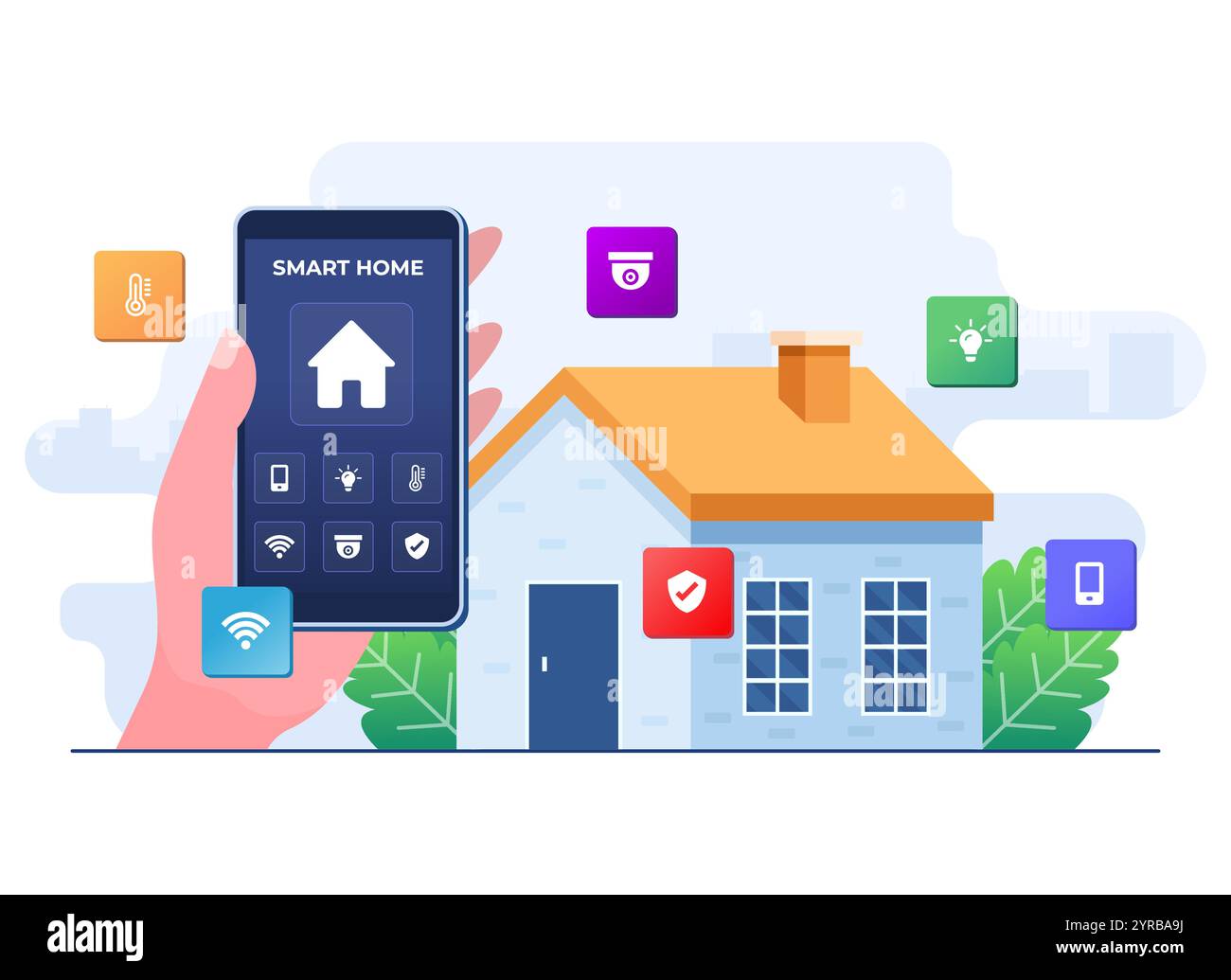
There’s a moment—maybe you’ve felt it—when you’re halfway down the driveway, and you know you left the garage door open. Or the AC blasting in an empty house. Or, worse, the front door unlocked. That little spike of panic used to mean turning the car around. But now? You just pull out your phone, tap a notification, and breathe. That’s the quiet magic of smartphone integration with smart home ecosystems. It’s not just about convenience anymore; it’s about turning your living space into something that responds to your will—from anywhere.
What Exactly Is a Smart Home Ecosystem?
Honestly, the term gets thrown around a lot. But let’s strip it down. A smart home ecosystem is a network of internet-connected devices—lights, thermostats, locks, cameras, speakers—that talk to each other and to you. The smartphone is the conductor of this orchestra. Without it, you’d have a bunch of solo instruments playing out of tune. With it, you get a symphony you can control with your thumb.
Sure, you can use physical switches or voice assistants like Alexa or Google Assistant. But the phone is the real hub. It’s the one device you always have, always charged (mostly), and always within reach. And that’s the core of the whole thing—your phone isn’t just a remote; it’s the central nervous system of your home.
The Big Three: How They Stack Up
Before we dive into the nitty-gritty, let’s talk about the main ecosystems. You’ve probably heard of them—Apple HomeKit, Google Home, and Amazon Alexa. Each has its own flavor, its own quirks, and its own way of integrating with your smartphone.
Apple HomeKit: The Walled Garden That Just Works
If you’re an iPhone user, HomeKit feels seamless. It’s baked into iOS, so your phone’s lock screen can show your front door camera feed without you even opening an app. Siri handles voice commands, and everything is encrypted end-to-end. The downside? It’s picky. You need HomeKit-certified devices, which can be pricier and less varied than other options. But for sheer polish, it’s hard to beat.
Google Home: The Smart Assistant’s Playground
Google’s approach is more open. It works with tons of devices, and the Google Home app is pretty intuitive. The real strength here is Google Assistant’s natural language processing—you can say things like “Hey Google, make the living room cozy,” and it’ll figure out the right combination of dimmed lights and warm thermostat settings. Plus, if you’re an Android user, the integration is just as deep as Apple’s is for iPhone.
Amazon Alexa: The Versatile Workhorse
Alexa is the most compatible ecosystem out there. It supports thousands of devices, and the Alexa app gives you granular control over routines and automations. The phone app isn’t as slick as Apple’s, but it’s packed with features. You can even use your phone as a remote for Echo devices, which is handy when you can’t find the TV remote… again.
| Ecosystem | Best For | Phone Integration Strength | Device Compatibility |
|---|---|---|---|
| Apple HomeKit | iPhone users who value privacy | Lock screen widgets, Siri shortcuts | Limited but certified |
| Google Home | Android users & open ecosystems | Deep Assistant integration, predictive routines | Wide range |
| Amazon Alexa | Smart home tinkerers & budget builders | Routines, voice control, app-based remote | Broadest compatibility |
Beyond the Basics: What Your Phone Can Actually Do
Here’s the deal—most people just use their phones to turn lights on and off. That’s like buying a sports car and only driving it to the grocery store. The real power lies in automations and geofencing. These are the features that make your home feel alive.
Geofencing is a game-changer. Your phone’s GPS knows when you’re leaving work, and it can trigger a “Leaving Home” routine. That means lights turn off, thermostat drops, doors lock, and cameras arm—all without you lifting a finger. And when you’re five minutes away, the reverse happens. The house “wakes up” for you. It’s not just convenience; it’s a feeling of being anticipated.
Routines That Make You Go “Wait, That’s Possible?”
Let me give you a real-world example. My buddy set up a routine called “Movie Night.” He taps a button on his phone, and the living room lights dim to 20%, the projector screen lowers, the soundbar switches to the right input, and his phone goes into Do Not Disturb mode. It takes one tap. One. That’s the kind of integration that feels like magic, but it’s just smart programming.
And it’s not just entertainment. Think about energy savings. A smart thermostat that learns your schedule and adjusts based on your phone’s location can cut your HVAC bill by 10-15%—maybe more. That’s not a trivial number. Over a year, that’s real money.
The Pain Points: It’s Not All Smooth Sailing
Okay, let’s be real for a second. Smart home integration isn’t perfect. There are days when you’ll yell at your phone because the light won’t turn off, or the app says “Device Offline” for the third time in a week. It happens. The most common issues are:
- Wi-Fi dead zones – Your smart devices need a strong signal. If your router is in the basement, your upstairs smart lock might lag.
- Protocol confusion – Zigbee, Z-Wave, Matter, Thread… it’s alphabet soup. Not all devices speak the same language, and your phone has to translate.
- App fatigue – If you buy devices from different brands, you might end up with five different apps. That defeats the purpose of a unified ecosystem.
The good news? The industry is moving toward Matter, a universal standard that promises to make all these devices work together seamlessly. It’s been a slow rollout, but it’s real progress. In a few years, this pain point might be a distant memory.
Security: The Elephant in the Living Room
You can’t talk about smartphone integration without talking about security. Your phone is the key to your house—literally. If someone gets into your phone, they could unlock your door, disable your alarm, or watch your security cameras. That’s a sobering thought.
But here’s the thing—most modern ecosystems have robust security. Apple uses end-to-end encryption for HomeKit. Google and Amazon offer two-factor authentication. The weak link is usually you. Reusing passwords, skipping software updates, or leaving your phone unlocked in public places… that’s where the risk lives. Enable biometric locks (Face ID or fingerprint) and use a password manager. It takes two minutes and saves you a world of hurt.
The Future: Your Phone as a Proactive Butler
We’re moving past the “tap a button” phase. The next wave is proactive automation. Your phone will learn your habits and make suggestions. For example, if you always turn the heat down at 10 PM, your phone might ask, “Want me to do this automatically every night?” Or it’ll notice you’re running low on coffee beans and suggest adding them to your shopping list—while your smart kitchen display shows the price at the local store.
Some of this is already happening. Google’s “Routines” can suggest actions based on your location and time of day. Apple’s Shortcuts app lets you create complex multi-step automations. But the next step is AI-driven prediction. Your home won’t just respond to you; it’ll anticipate you. That’s both exciting and a little eerie, honestly.
Practical Tips for Getting Started (Without Losing Your Mind)
If you’re new to this, don’t try to automate everything at once. That’s a recipe for frustration. Start small. Here’s a sensible path:
- Pick one ecosystem – Stick with Apple, Google, or Amazon. Mixing them gets messy fast.
- Start with a hub – A smart speaker (like an Echo or Nest Audio) is a cheap, easy entry point.
- Add a smart plug or two – You can control lamps, fans, or coffee makers. Instant gratification.
- Then, tackle the thermostat – It’s the one device that pays for itself over time.
- Finally, security – Smart locks and cameras. Do this once you’re comfortable with the ecosystem.
And remember—your smartphone is the glue. Keep its software updated, and make sure the apps you use are from reputable developers. A little caution goes a long way.
The Quiet Shift in How We Live
What’s fascinating about smartphone integration with smart homes isn’t the tech itself. It’s the behavioral shift. We’re moving from “I have to remember to do things” to “I set it up once, and it just happens.” That frees up mental bandwidth. You stop worrying about whether you left the iron on. You start trusting the system—and that trust, once earned, is hard to give up.
There’s a certain poetry in it, too. Your phone, that little slab of glass and metal, becomes a proxy for your presence. It carries your preferences, your schedules, your routines. And when you walk through the door, the house doesn’t just light up—it welcomes you. That’s not convenience. That’s a new kind of comfort.
So, the next time you tap that little icon to adjust your thermostat from bed, take a second to appreciate what’s happening. You’re not just controlling a device. You’re orchestrating an environment. And honestly? That’s pretty incredible.
As the ecosystem matures, the line between your digital life and your physical space will blur even further. The question isn’t whether you’ll adopt it—it’s how much of your daily rhythm you